
STUDYLYTICS LABS
Insight to Innovation

Research Node
Materials Science & Materials
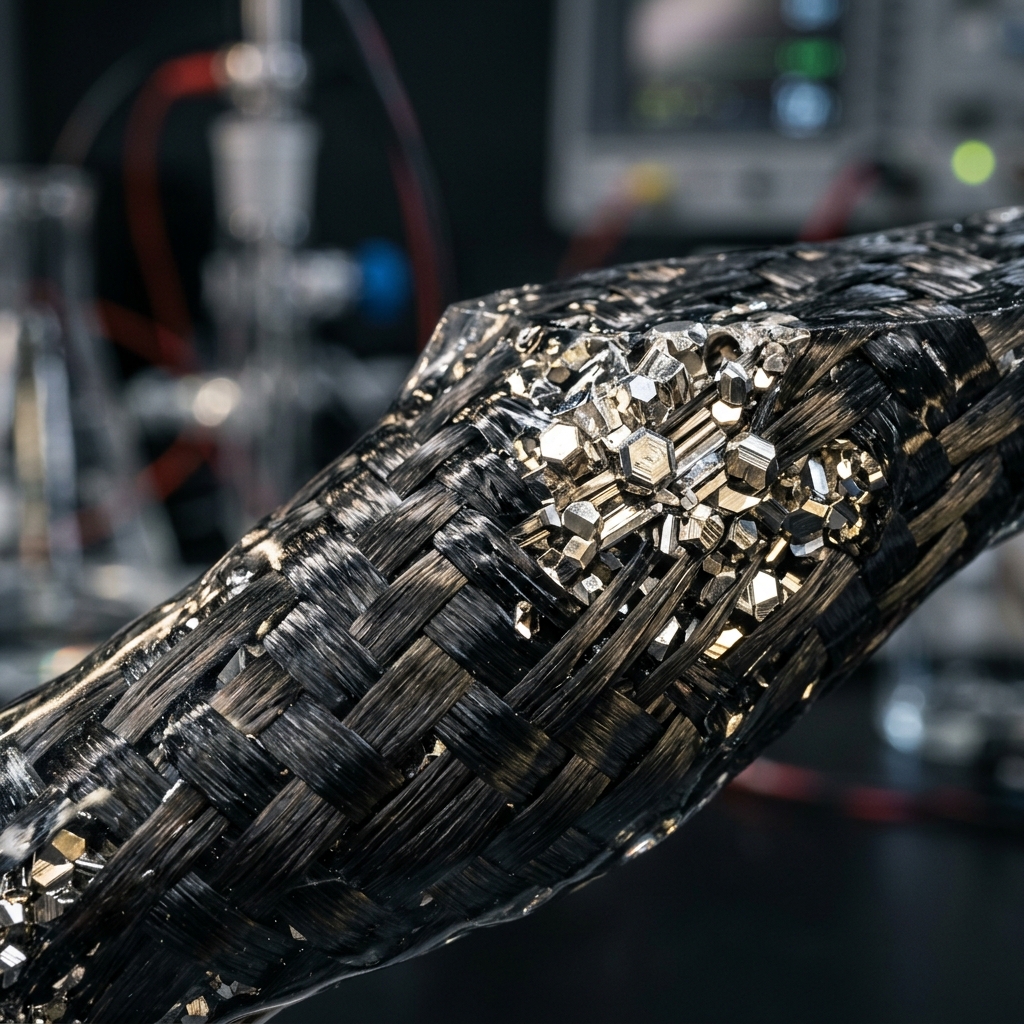
We work on different types of materials like composites, ceramics, polymers, and smart materials. Our main focus of latest updates in smart materials are on shape memory alloys, piezoelectric materials, electrostrictive materials, magnetostrictive materials, and smart composites.
- Composite: Currently, composites are used extensively in consumer products and building materials as a light weight, cost efficient alternative to metals. Parts as large as passenger aircraft fuselages are being constructed as a single unit from composite materials.
- Ceramics are inorganic, nonmetallic materials (such as carbides, oxides and nitrides) made by shaping at a high temperature. Ceramics are hard, brittle, heat- and corrosion-resistant, and most often have a crystalline structure.
- Polymer materials are a kind of important materials that developed rapidly in biological applications. Synthetic polymer materials have many attractive properties, such as monodispersity, biocompatibility, controlled composition and chain length, and tunable chemical properties.
- Smart materials have properties that react to changes in their environment. This means that one of their properties can be changed by an external condition, such as temperature, light, pressure, electricity, voltage, pH, or chemical compounds.
Along with this research on types of smart materials we also do our precise work on applications of smart materials like smart materials used in batteries, superconductors, and electronic circuits.
Hypothesis Verification Workbench
Simulate live research operations and record empirical parameters.
LAB-STATION::[METALLURGY]
NODE: CRYSTAL_LATTICE
VERIFY: DYNAMIC_MODE
RATE: 2.4e4 samples/s
STATE: CALIBRATED_IDLE
Control System
PARAMETER_A
0.00
PARAMETER_B
0.00
PARAMETER_C
0.00